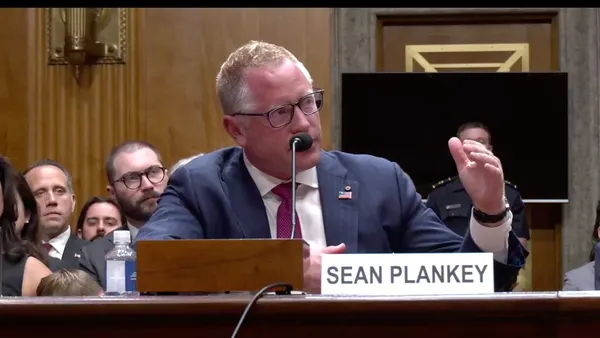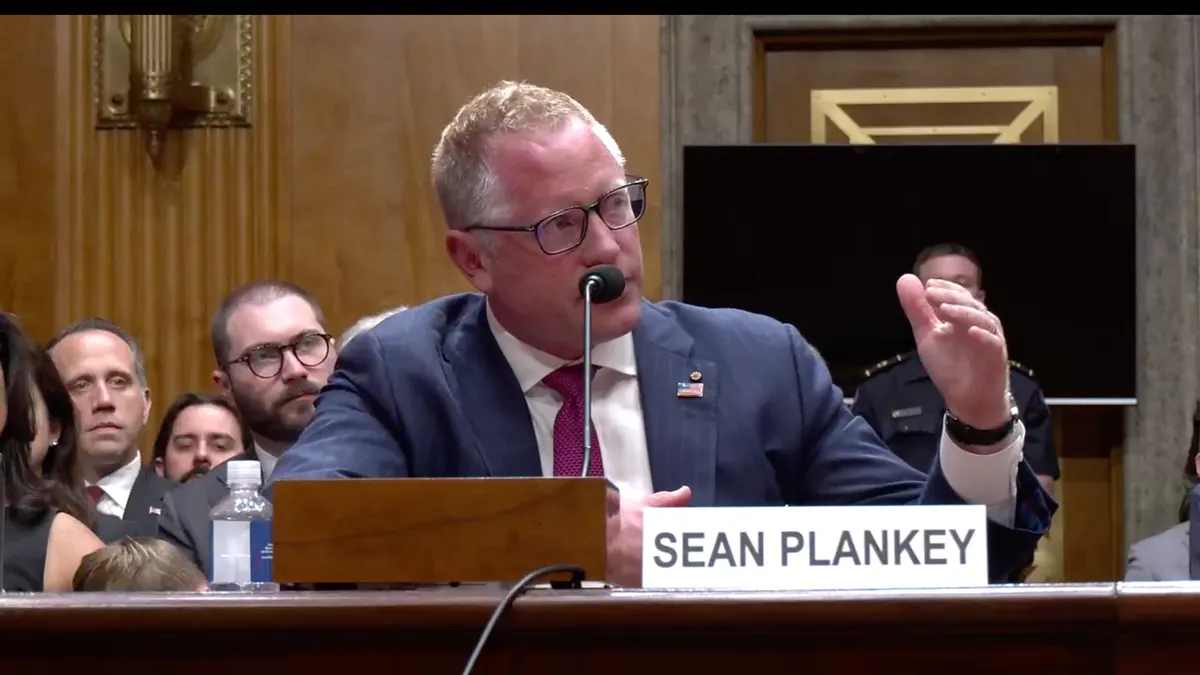
The confirmation prospects for Sean Plankey, President Donald Trump’s nominee to lead the Cybersecurity and Infrastructure Security Agency, have dimmed further following Plankey’s unceremonious departure from a job at the Department of Homeland Security.
Security personnel escorted Plankey out of a DHS facility on Monday, a person familiar with the matter told Cybersecurity Dive, confirming an incident first reported by CBS News. Plankey announced on Wednesday that he had left his job as a senior Coast Guard adviser to DHS Secretary Kristi Noem, but he framed his departure as a voluntary one intended to help him focus on his nomination to serve as CISA director.
“I must pivot and prepare for the task ahead,” he wrote on LinkedIn.
Plankey has also privately told people that he left the Coast Guard in order to resolve a Republican senator’s concerns about his involvement in shipbuilding contracts, according to Nextgov.
But Plankey’s departure was anything but amicable or voluntary, the person familiar with the matter told Cybersecurity Dive. “He was operating autonomously inside CISA and ruffling feathers,” this person said. It is unusual for nominees to involve themselves in agency leadership decisions prior to being confirmed.
When a Monday prep session for one of Noem’s oversight hearings on Capitol Hill “didn’t go well,” that was “a last straw” for Plankey’s service in the administration, the person familiar with the matter said.
“I think he’s overstayed his welcome,” the person added. “You can probably cross him off your list as a future director.”
In fact, although Trump renominated Plankey in January after his original nomination expired, that was “an administrative error in a broader list of nominations,” according to CBS News, which also reported on Plankey’s unusual involvement in CISA’s management.
A White House official disputed that account, telling Cybersecurity Dive that the “reporting about his renomination being an error is not accurate, and he is still the administration’s nominee.”
Uncertainty for CISA, partners
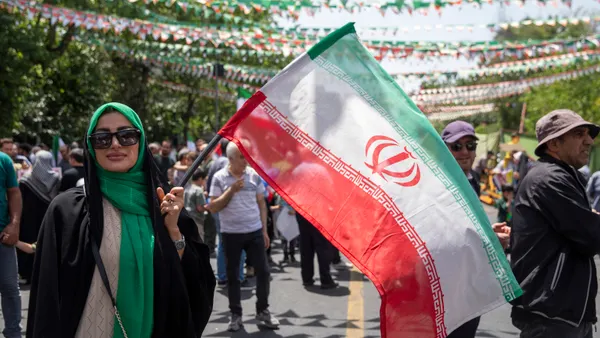
The controversy surrounding Plankey has exacerbated worries about the future of CISA and its ability to help state and local governments and critical infrastructure operators defend themselves from cyberattacks, especially amid growing threats from Iran-linked actors.
For more than a year, CISA has weathered personnel cuts and program changes that have sapped its ability to fulfill its central missions, especially its work supporting infrastructure providers. The agency is on its third acting director, following the Trump administration’s abrupt removal last week of a scandal-plagued official who had no cybersecurity background but close ties to Noem.
The new Iran war could prove to be a significant test of a depleted CISA’s ability to analyze and distribute threat information, provide defensive guidance and deploy experts to help remediate any significant hacks. Without Senate-confirmed leadership, experts say, CISA will struggle to plan ahead or make major operational changes, forcing it to tread water while the threat landscape intensifies.
Industry groups have praised Trump’s selection of Plankey, a former National Security Council and Energy Department cybersecurity official who served in the Coast Guard and at U.S. Cyber Command and also worked in private industry. But his confirmation was in doubt even before this week’s events, as several senators from both parties placed holds on his nomination over various matters.
Now, with Plankey’s fate even more uncertain, the business community and CISA’s other partners have been left wondering when — or even if — the agency will receive a permanent Trump-appointed director.
Plankey, DHS and CISA did not respond to requests for comment.