

LAS VEGAS — The U.S. government is closely monitoring frontier AI labs’ safety decision-making and is ready to step in if it sees a company going too far, a senior administration official said on Thursday.
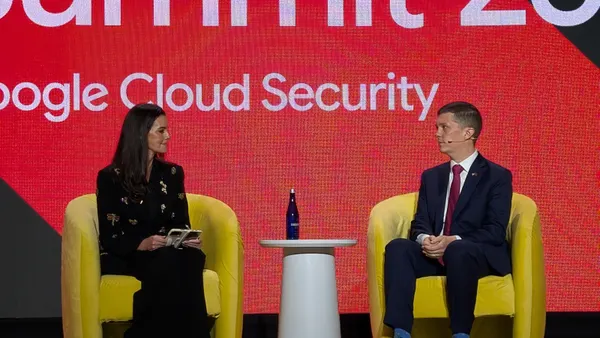
“There's no reason that you can't accomplish the goals that I think AI labs have, in terms of a comically fast speed of innovation that unlocks [increased] prosperity, while also not creating crippling risks,” Joseph Alm, assistant secretary for cyber, infrastructure, risk and resilience policy at the Department of Homeland Security, said during a panel at the Black Hat USA cybersecurity conference here. “And we are getting to that place.”
In the past, Alm said, “the AI players were operating in a narrow space where they were optimizing for [model] intelligence,” but now they understand that policymakers “won't just sit by and let you make a Terminator factory.”
Alm demurred when Cybersecurity Dive asked how the government would prevent a frontier lab from creating that kind of dangerous technology. “I'm not going to outline what those tools are,” he said. “I know what those tools are, and there’s a lot of them.”
Chastened by mistakes
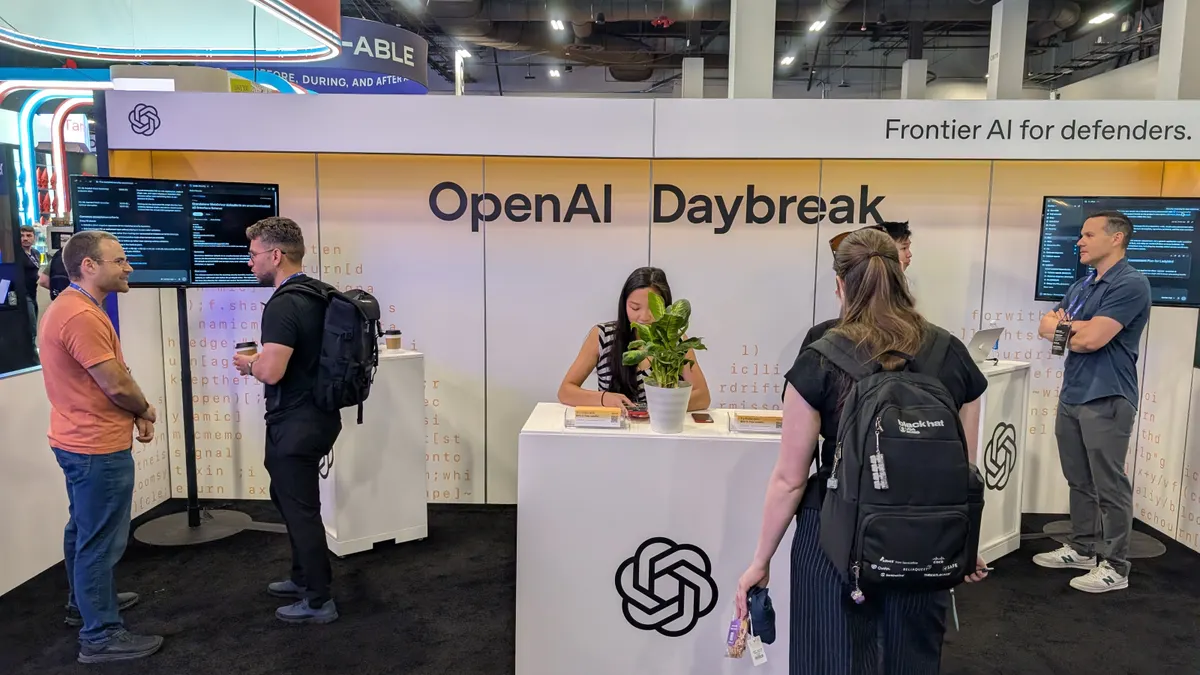
Alm’s comments came as the cybersecurity community continued to digest OpenAI’s and Anthropic’s recent disclosures about their models escaping test environments and hacking other companies. The OpenAI incident was the talk of Black Hat following a Wednesday presentation by two company engineers in which they revealed striking new details about their models’ self-directed behavior.
The OpenAI engineers said their company is slowing down its testing and erecting new guardrails to prevent a repeat of the hacking episode. Their comments mirrored the newly circumspect language that both OpenAI and Anthropic used in announcing their respective incidents.
DHS’s Alm said it was a good sign that the two companies have gone out of their way to say they’re treading carefully now.
“Companies are being much more intentional about risks,” Alm said, “and they are being much more intentional about engaging with my leadership at the highest levels.”
Meanwhile, top government officials have been “aggressive about their engagements” with AI executives to ensure that government and industry are “working closely in this space and there's not a drastic misalignment,” Alm said.
Pairing innovation with security
The Trump administration initially took a hands-off approach to AI security, but after Anthropic’s release of Mythos in April, the government shifted to a more interventionist approach, as officials worried that frontier labs weren’t adequately restraining their advanced models. The recent autonomous hacking incidents have highlighted security concerns about the White House’s focus on unrestrained innovation.
Alm said that focus remained intact following the recent incidents.
“There are substantial risks with AI. But at the same time, the administration has been very intentional about not wanting the bureaucrats to define this space,” he said. “We don’t want them to try to figure out where things are going when, candidly, even the smartest people in the world don’t really know where things are going.”
He added that Silicon Valley’s “move-fast-and-break-things” model — in which companies “ignore that mass of regulations and make something cool” — has “actually worked, mostly.”
The increasing tempo of conversations between government leaders and AI executives will do more to prevent security crises than regulation would, Alm argued.
“They realize now that this is a dialogue, and that we are actually good partners in that dialogue,” he said. “We're not trying to slow them down, but again, [no one wants] a Terminator factory.”