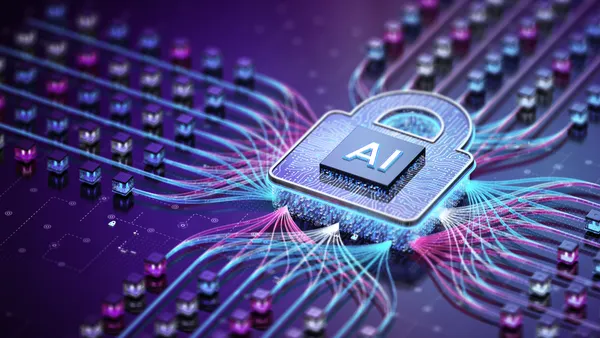

AI agents are no longer theoretical. They’re executing database queries, modifying configurations, and managing workflows based on natural language instructions – often with minimal governance oversight. The challenge isn’t just what AI agents can do. It’s establishing the governance frameworks to control how they do it.
December 2024 marked a significant shift when the Model Context Protocol (MCP) 2.0 introduced structured control mechanisms that enable governance frameworks for agentic AI. For security leaders, it represents meaningful progress, but it’s not a complete solution.
The Timeline Is Compressed
Industry projections suggest most large enterprises will have AI agents embedded in production workflows within 12 to 18 months. The critical question: Will you establish governance frameworks before deployment, or retrofit controls after incidents expose weaknesses?
Early adopters of structured governance define operational standards. Late movers inherit technical debt that compounds with scale.
Three Security Improvements That Matter
1. Authorization Boundaries That Contain Damage
MCP 2.0 provides mechanisms to replace implicit trust with explicit, scoped authorization. Each credential is bound to a specific system and cannot be reused across services.
The impact: When credential exposure occurs, the blast radius is contained to specific authorization scope rather than cascading across your environment. Credential compromise shifts from catastrophe to contained incident.
2. Structured Schemas That Eliminate Injection Attacks
Every tool must define precise input and output schemas, with server-side validation before execution. AI models cannot generate freeform commands or invent parameters.
The impact: AI operations become deterministic and testable. This can help provide the type of audit trail that may support regulatory expectations – documented evidence that AI follows defined processes rather than operating in a black box.
3. Human Oversight Built into Workflows
MCP 2.0 pauses AI operations to request human input when information is missing, ambiguous, or requires approval.
The impact: Efficiency for routine tasks with checkpoints for high-stakes decisions. Plus, explicit authorization trails for significant actions – features that may help support compliance efforts under frameworks like the EU AI Act and Digital Operational Resilience Act (DORA).
The Critical Gaps That Remain
Server Identity
The problem: No mechanism exists to verify MCP server authenticity.
What to do: Deploy servers only on verified, controlled infrastructure with proper network segmentation.
Tool Provenance
The problem: No built-in mechanisms to verify tool authenticity or detect unauthorized modifications.
What to do: Maintain internal tool registries with mandatory security review before deployment.
Runtime Isolation
The problem: Tools execute with whatever permissions the host environment permits.
What to do: Implement isolated execution environments with minimum necessary privileges.
Prompt Manipulation
The problem: Adversaries can manipulate AI decision-making through carefully crafted prompts or metadata.
What to do: Validation and review workflows remain essential.
Multi-Agent Coordination
The problem: No guardrails for interactions between multiple AI agents.
What to do: Implement rate limiting, automatic shutoffs, and behavioral monitoring.
Why Act Now
MCP 2.0 provides control mechanisms that may help support compliance efforts with emerging regulatory requirements – the EU AI Act, DORA, and U.S. executive orders on AI safety. Organizations implementing these frameworks may position themselves to better address anticipated compliance mandates.
When the first high-profile AI incidents occur, market expectations will shift rapidly toward governed deployment. Companies with mature frameworks will scale confidently while competitors pause to retrofit controls.
Your Next Steps
If you’re still experimenting: Adopt MCP 2.0 as standard from Day One. Establish governance policies before scaling.
If you’re moving to production: Conduct comprehensive AI capability audits. Create risk classification frameworks. Build migration plans for high-risk systems.
If you already have agents deployed: Emergency assessment within 14 days. Compensating controls within 30 days. Migration plans targeting 90 days for high-risk systems.
The opportunity is clear: Build governance into your foundation rather than accumulating technical debt. MCP 2.0 may provide tools that can help build that foundation, though compensating controls for unresolved gaps should be considered.
Visit readiverse.com/mcp to download the complete Readiness Report, take a self-assessment, and watch our expert analysis of MCP 2.0’s security implications.